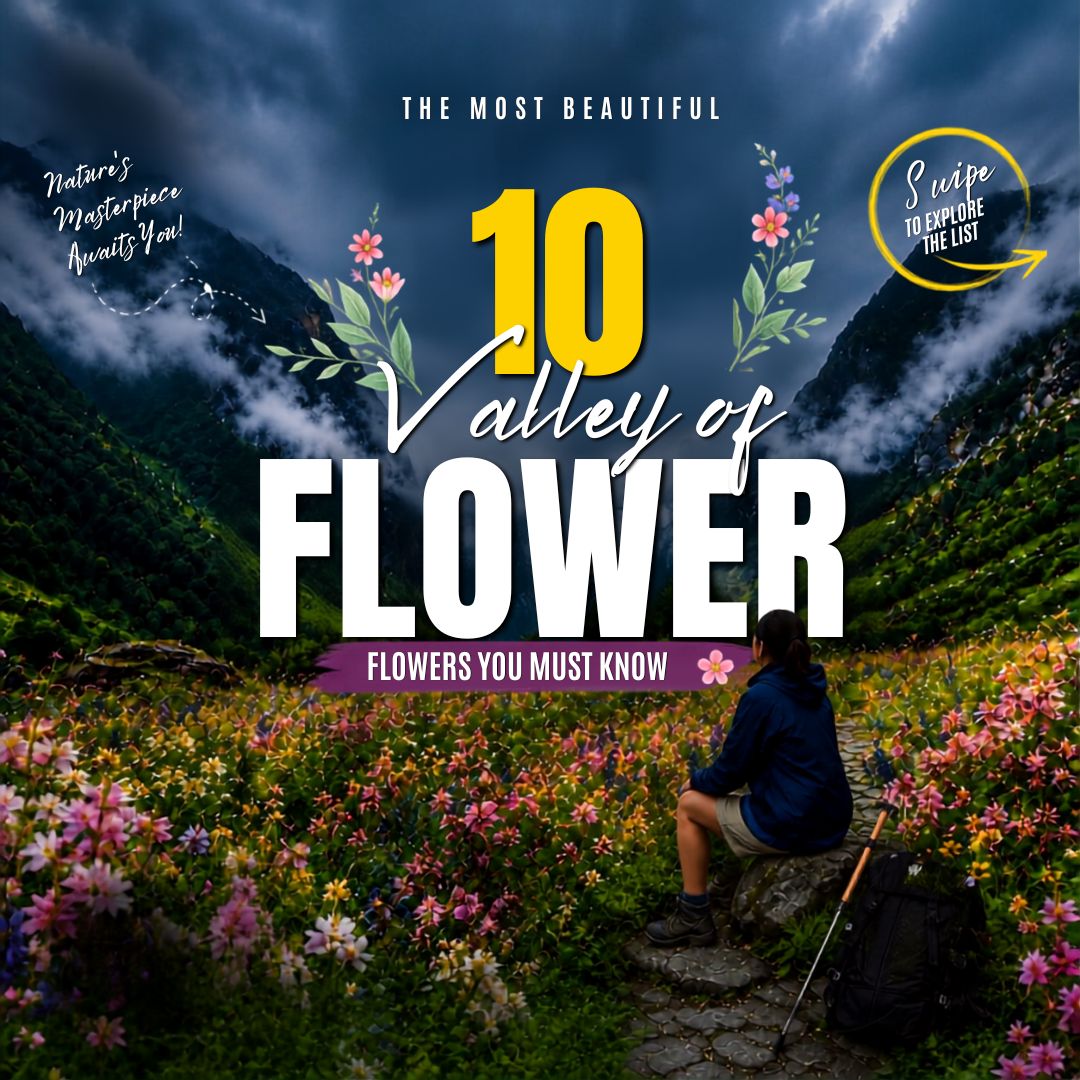
10 Blooms You Will Find on the Trek and Everything You Need to Know About Them
Flowers of the Valley of Flowers
Before You Start: Key Information About the Valley
Location: Chamoli District, Uttarakhand — accessible via Govindghat from Joshimath
Base Village: Ghangaria (also called Govindghat) — 14 km trek from the roadhead at Pulna
Valley Entry: 4 km walk from Ghangaria into the valley itself
Best Time: Mid-July to mid-August — peak bloom window for most species listed below
Entry Fee: National Park entry permit required — arrange at Ghangaria
Rules: No picking, no uprooting, no off-trail walking. The valley is a UNESCO site — every rule exists for a reasonAltitude: 3,352 metres at Ghangaria; the valley floor reaches up to 3,600 metres and beyond
Difficulty: Easy to Moderate — the valley trail itself is well-paved and manageable for most fitness levels
The 10 Flowers — A Field Guide for the Trail
Each entry below gives you the common name, botanical name, key facts, what the flower looks like in context, and a WravelOn tip for finding or photographing it on the trek.
1. Himalayan Blue Poppy
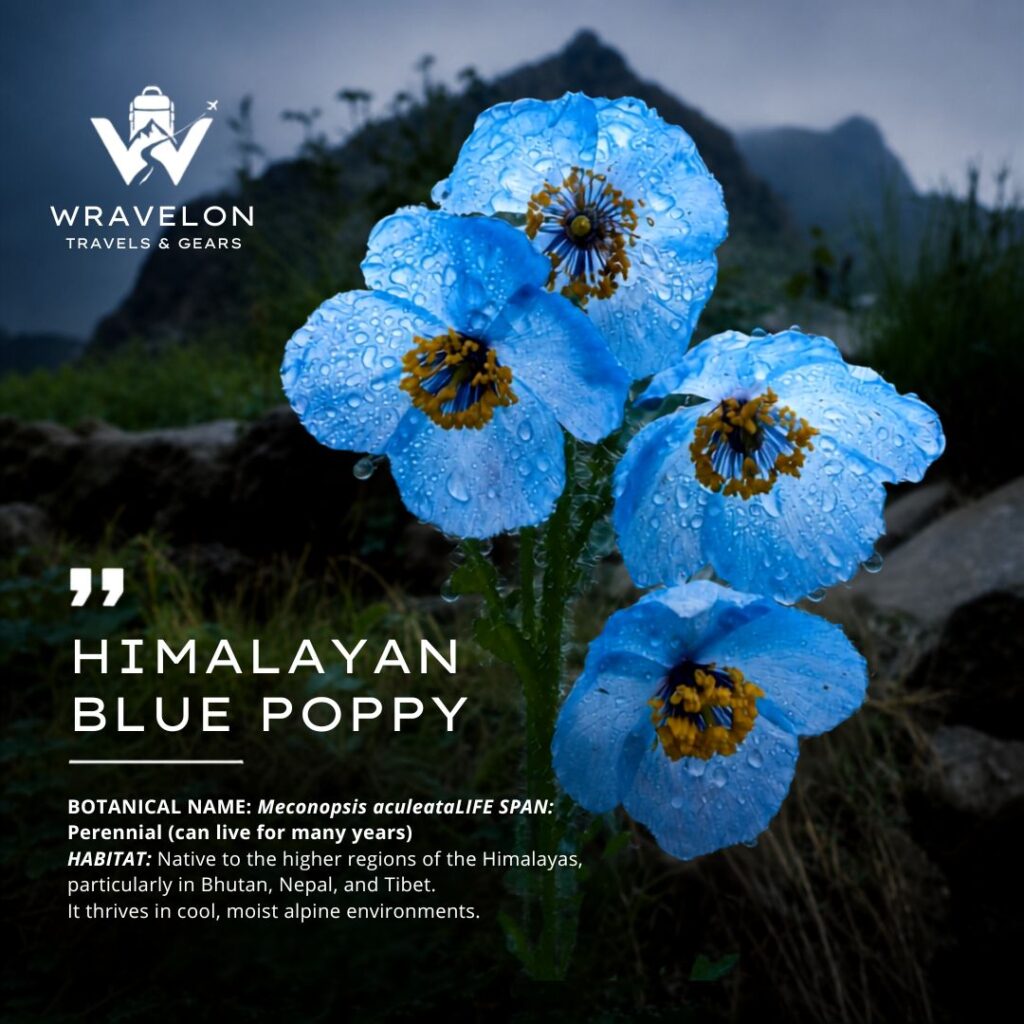
The Himalayan Blue Poppy is widely considered the crown jewel of the Valley of Flowers. There are very few flowers in the world that bloom in true blue, and this is one of them. Spotting one in the wild is often described by trekkers as the moment the entire journey becomes worth it. It blooms during peak monsoon — July and August — which makes it visible only to those willing to trek in the rain.
WravelOn Tip: Look for this on the upper reaches of the valley floor, closer to the tree line. They tend to cluster near rocky patches where water doesn’t pool.
2. Himalayan Knotweed
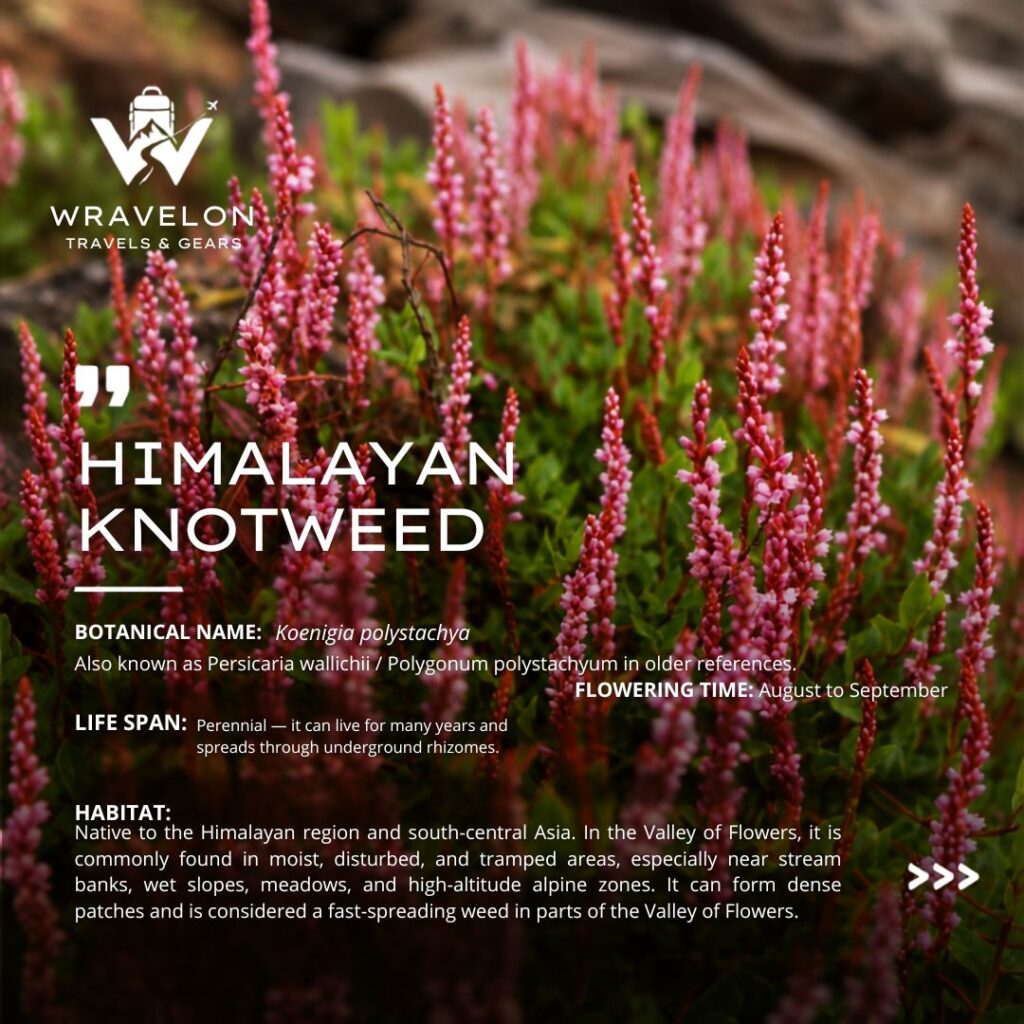
Himalayan Knotweed might not have the glamour of the Blue Poppy, but it is one of the most visually striking plants when seen in volume. Tall spikes of tiny white to pale pink flowers rise in dense, brushy clusters that can carpet entire sections of the valley. In August, when it reaches full bloom, the valley floor takes on an almost dreamlike, snow-dusted appearance from a distance. It is a plant that rewards the wide-angle view.
WravelOn Tip: This one photographs best in the early morning when the light hits it low and sideways. The delicate flower spikes glow against the darker green backdrop.
3. Cobra Lily
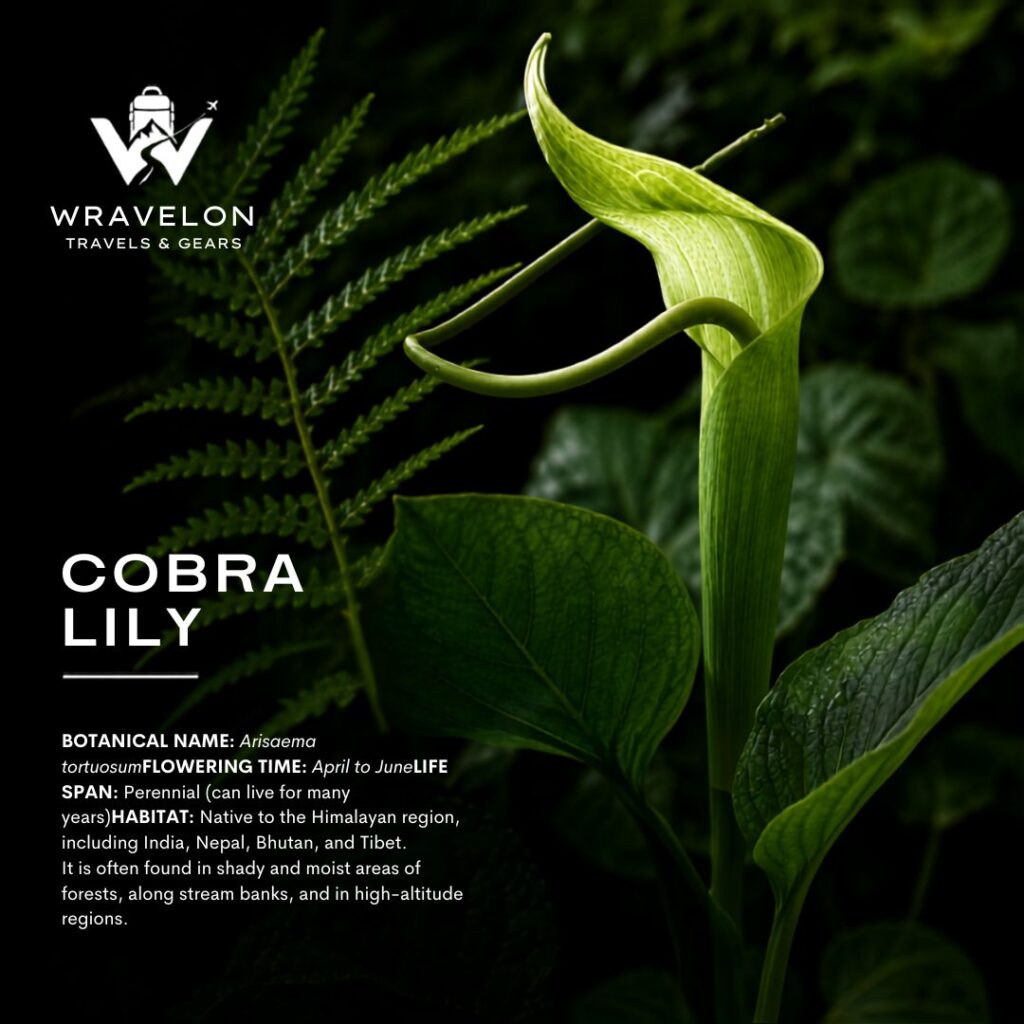
The Cobra Lily earns its name immediately upon sighting, its hooded, tubular spathe curves forward and upward with the unmistakable shape of a cobra poised to strike. It is less a wildflower and more a piece of natural architecture. Found in the shadier, more forested lower stretches of the valley approach, it is usually one of the first unusual plants you encounter on the route up from Ghangaria.
WravelOn Tip: Keep an eye out on the shaded side of the trail between Ghangaria and the valley entrance. The Cobra Lily does not like direct sun and hides in the undergrowth.
4. Marsh Marigold
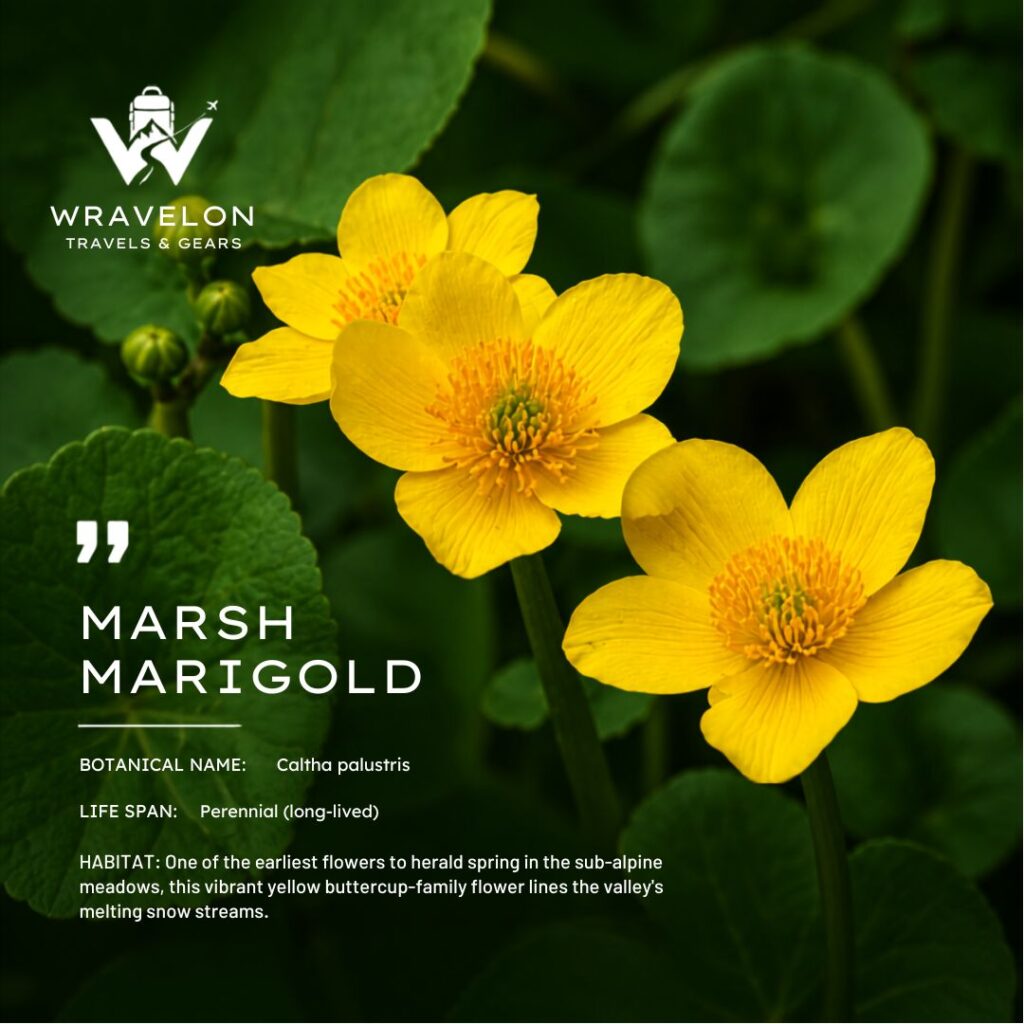
Bright, clean, and unmistakably cheerful, the Marsh Marigold is one of the first flowers to appear as the snow melts and the valley wakes up in early summer. Its vivid yellow petals — part of the buttercup family — line the edges of glacial streams and meltwater channels, often growing so close to the water they are partially submerged. You will see these in abundance in June. By August they begin to thin out, replaced by later bloomers.
WravelOn Tip: Follow the sound of running water. The Marsh Marigold is almost always found right beside a stream. Look down at your feet near any water crossing — you are probably already standing among them.
5. Brahma Kamal
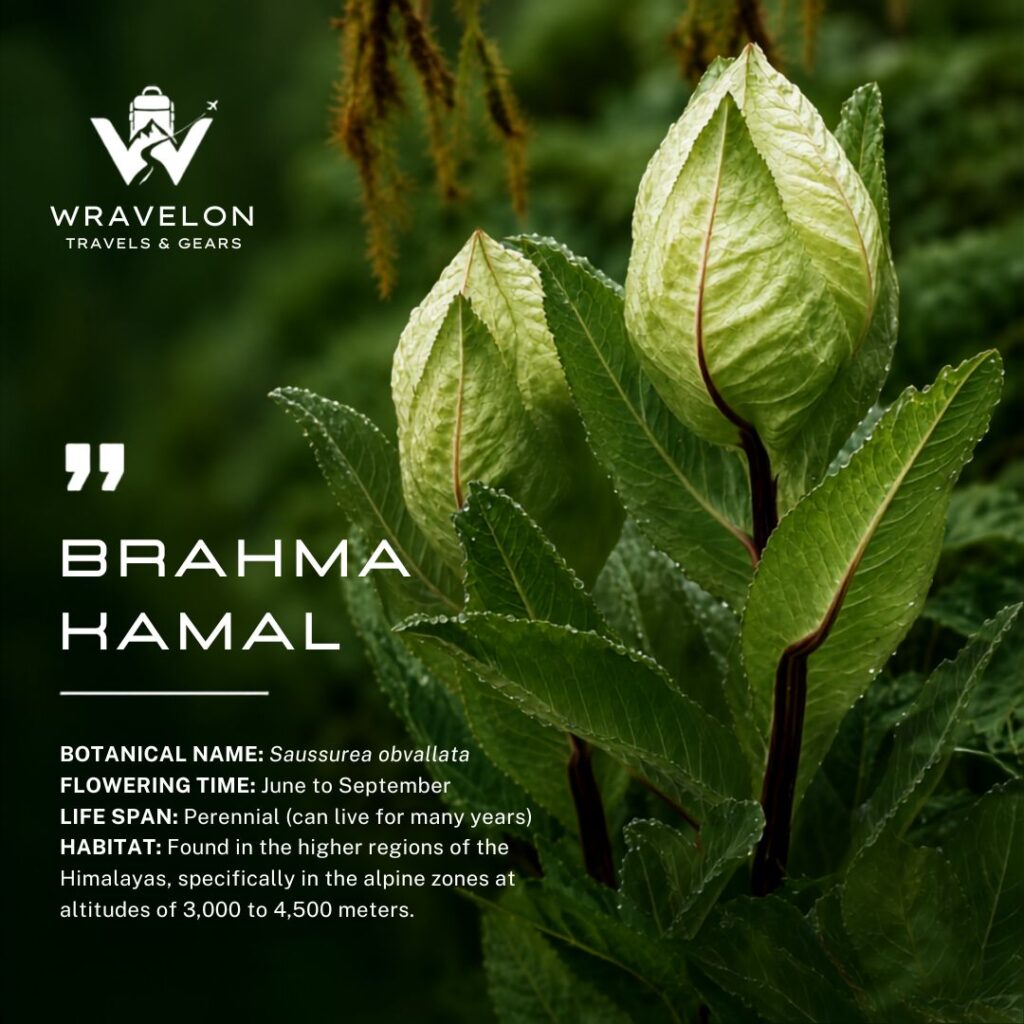
The Brahma Kamal holds deep spiritual significance across Uttarakhand and is considered one of the most sacred flowers in Hinduism — associated with Lord Brahma and offered at temples including Kedarnath and Hemkund Sahib, which sits at the top of a trail adjacent to the Valley of Flowers. Unlike most flowers in the valley, the Brahma Kamal does not have conventional petals. Its bloom is encased in a papery, translucent envelope of bracts that glow silver-green in the light. It blooms after dark, which means few trekkers actually see it fully open — another reason this flower has accumulated so much myth and reverence over centuries.
WravelOn Tip: If you are doing the Hemkund Sahib side trek, this is where you are most likely to encounter Brahma Kamal in numbers. Start early from Ghangaria and look on the higher rocky slopes above the tree line.
6. Himalayan Bellflower
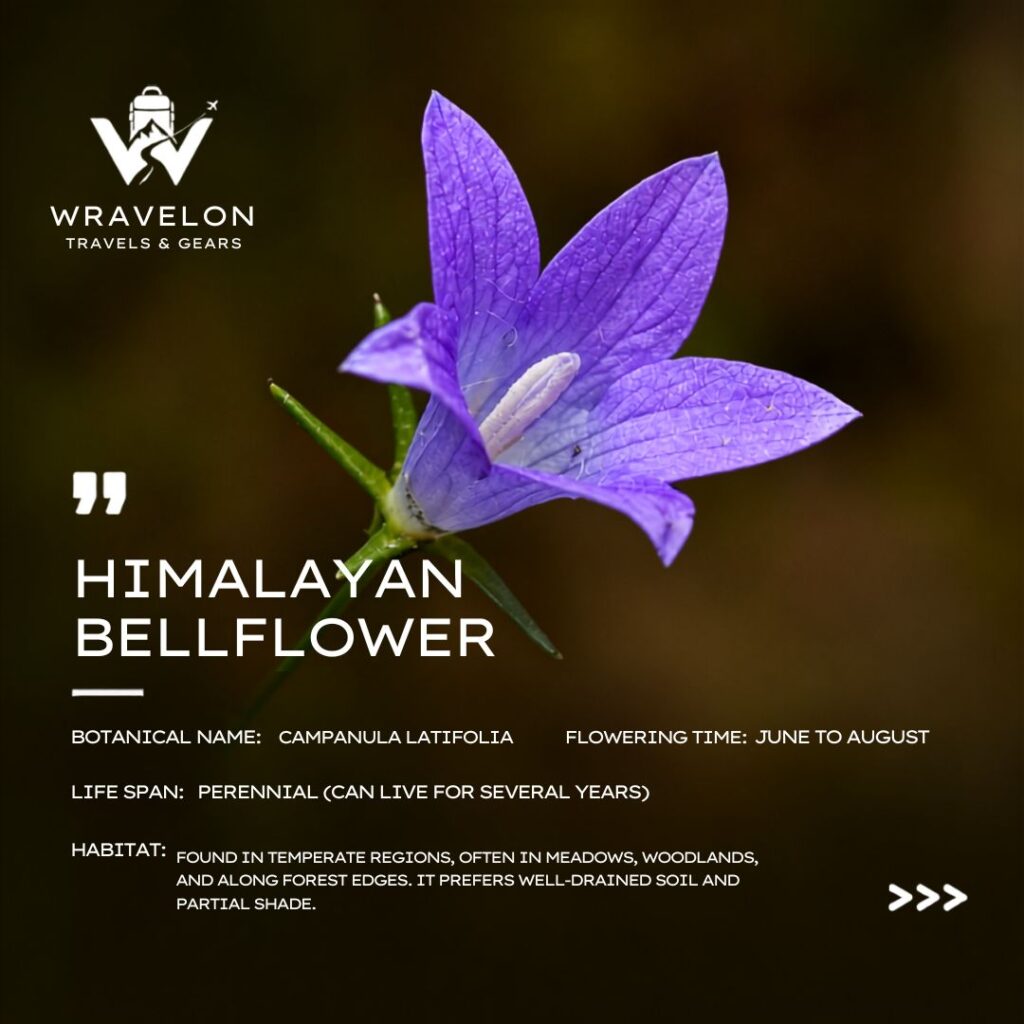
The Himalayan Bellflower is one of those flowers that stops you mid-stride. A vivid violet-purple, shaped exactly as its name suggests — a perfect open bell — it grows on tall, slender stems that sway noticeably in the mountain breeze. In the Valley of Flowers, they appear in small scattered groups among the grasses, creating pockets of deep purple across the green meadows. They are a favourite subject for photographers because the colour is so saturated and the shape so clean that even a basic camera can produce a striking shot.
WravelOn Tip: These are often found at the edges of the trail rather than deep in the meadow. Walk slowly and look to the sides — the bellflower is easy to walk right past if you are watching your feet on the rocky path.
7. Himalayan Slipper Orchid
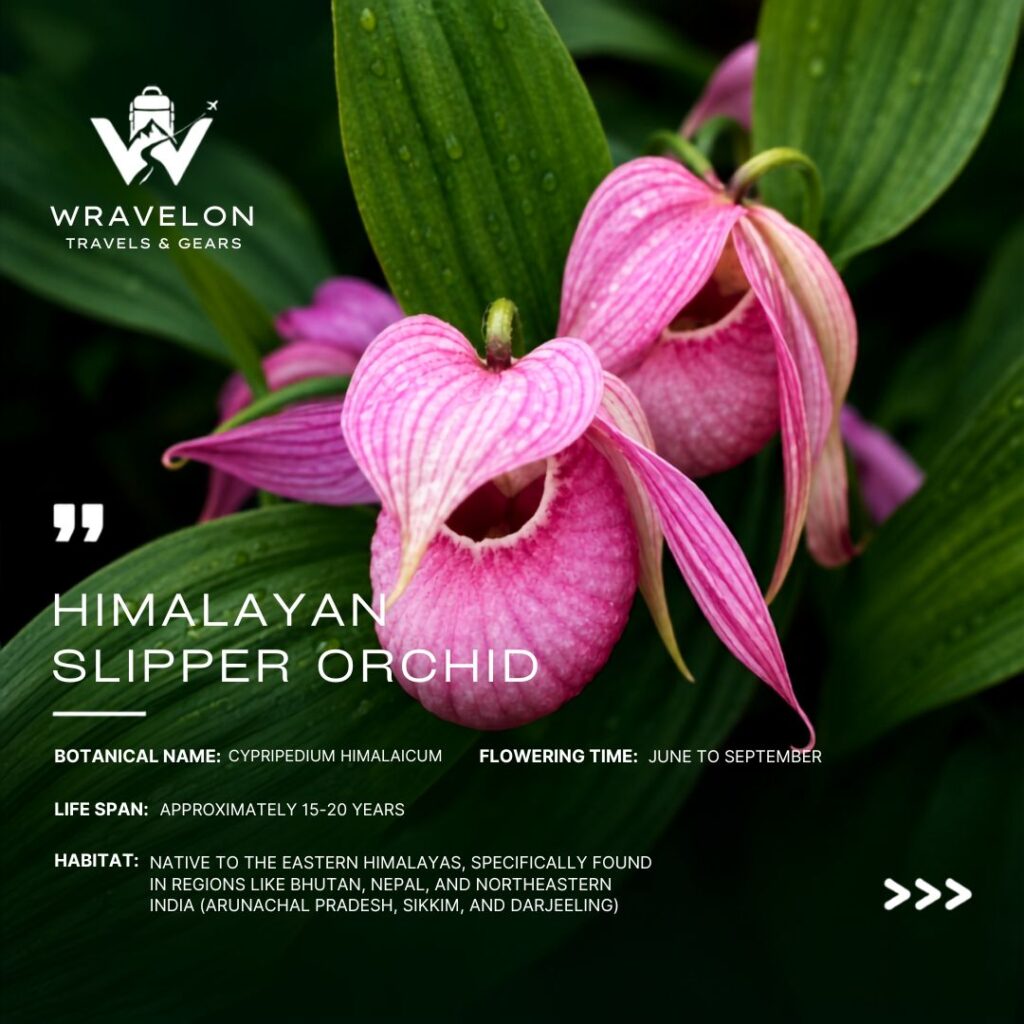
The Himalayan Slipper Orchid is perhaps the rarest flower you are likely to encounter in the valley. Its distinctive pouch-shaped lower petal — the ‘slipper’ — is a deep, striped pink and purple, and the overall structure of the flower is unlike anything else on the trail. It is a protected species under Indian law, and collection or disturbance of the plant is prohibited. Seeing one is genuinely a matter of luck. Trekkers who do spot it often describe it as the highlight of the entire trip. It is small enough to miss if you are not looking carefully.
WravelOn Tip: Slow down in sections where the trail passes through partially shaded, mossy ground. The Slipper Orchid does not stand tall — it grows low and blends with surrounding vegetation. Crouch down to get a proper look.
8. White Himalayan Marsh Orchid
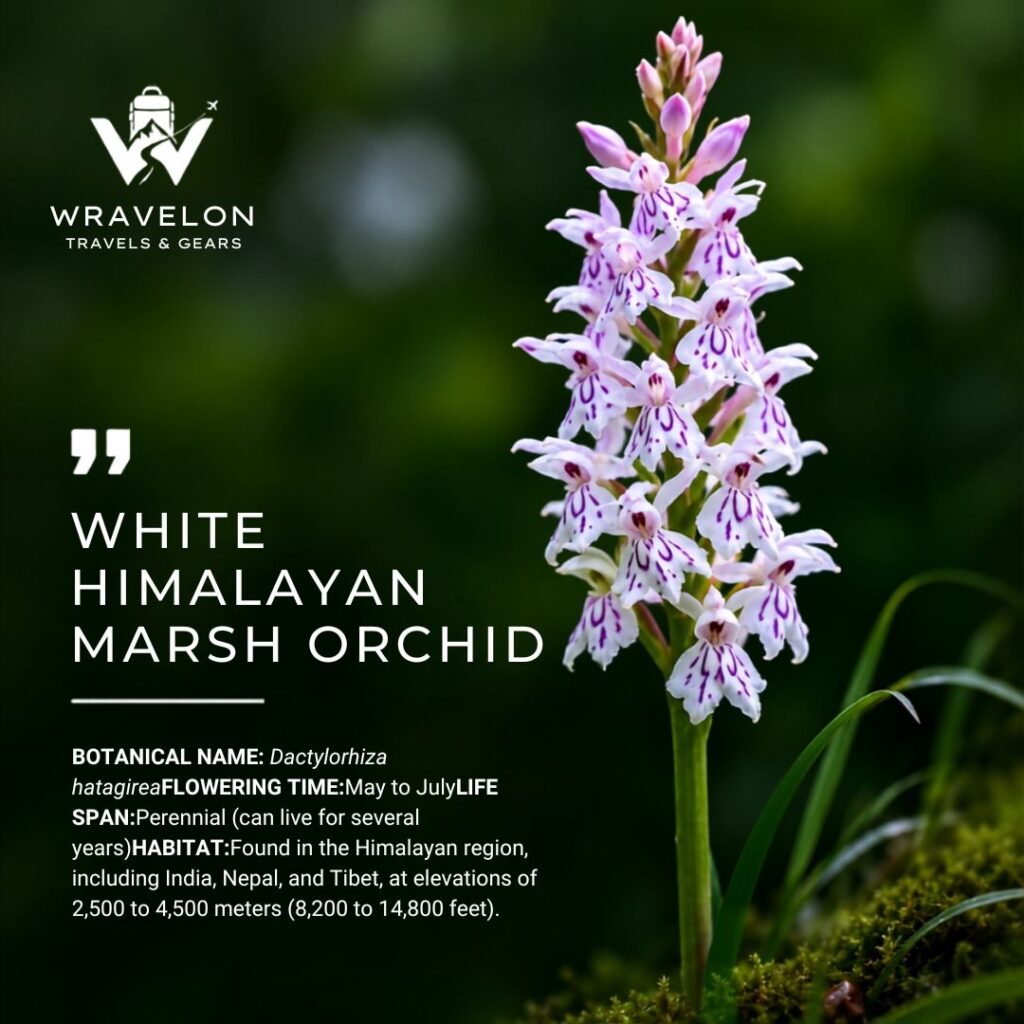
Where the Slipper Orchid is rare and dramatic, the White Himalayan Marsh Orchid is the valley’s elegant, common counterpart — and no less beautiful for it. Clusters of small white to pale purple flowers arranged in a tapering spike rise from the boggy meadows, particularly in areas where the ground retains water from snowmelt. This orchid is one of the signature plants of the valley’s early-to-mid season. It is also a key medicinal plant in traditional Ayurvedic practice, known locally as Salep or Salam Panja, which has contributed to its decline in some regions — making the protected environment of the valley especially important for its survival.
WravelOn Tip: Look in the wetter, boggy sections of the valley floor, particularly after a rain. Patches of Marsh Orchid often appear where other grasses thin out due to waterlogging.
9. Woolly Fritillary
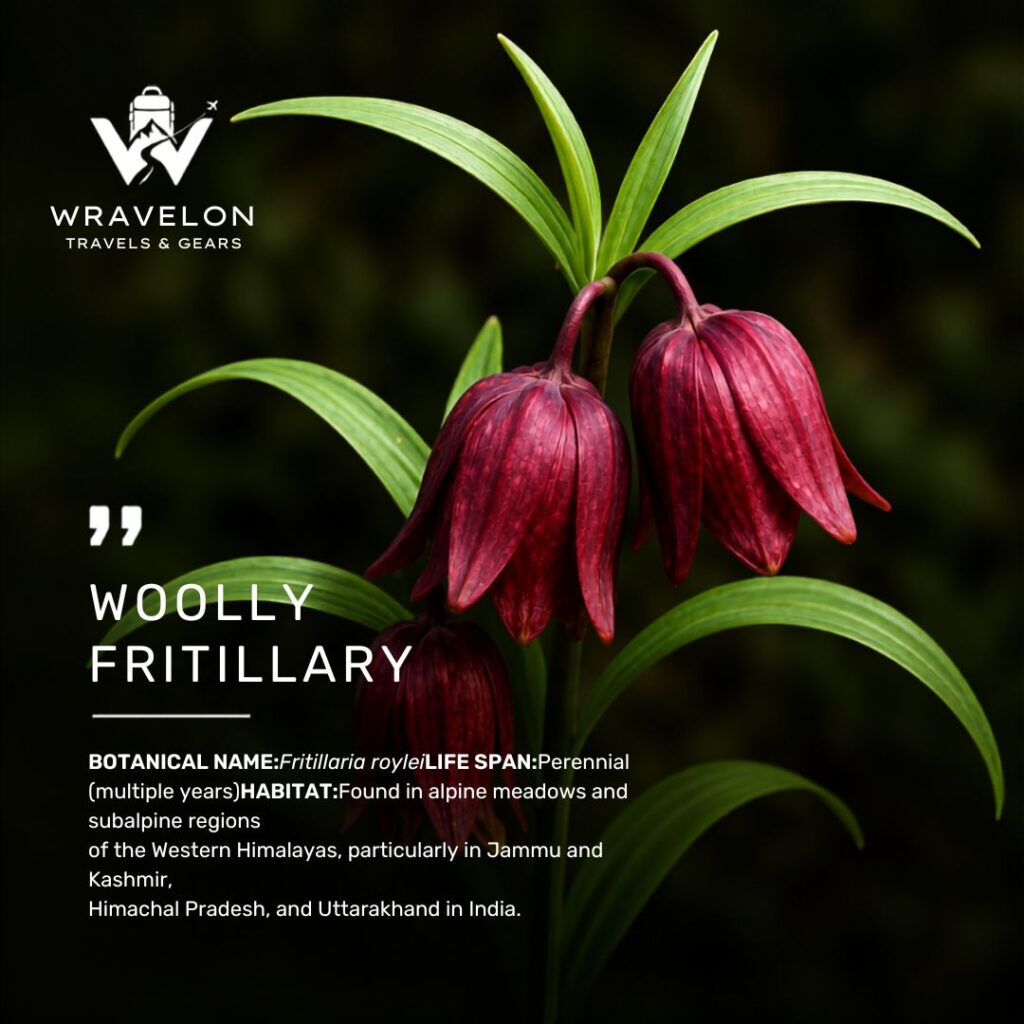
The Woolly Fritillary is one of the valley’s more unusual-looking flowers, and that is precisely what makes it memorable. Its pendant, bell-shaped flowers hang in a deep burgundy-red to maroon, often with a subtle chequered pattern on the petals. They grow in small groups among the grasses, stem upright, flowers drooping — giving the impression of a flower that is slightly too heavy for itself. In folklore and traditional medicine, Fritillaria species have been used across the Himalayas for centuries. Finding them in the valley today is a reminder of how much botanical history is quietly packed into this stretch of ground.
WravelOn Tip: The Woolly Fritillary blends easily into dry grass. Look for the deep maroon colour among the lighter greens in the drier, less marshy sections of the trail.
10. Snow Lotus
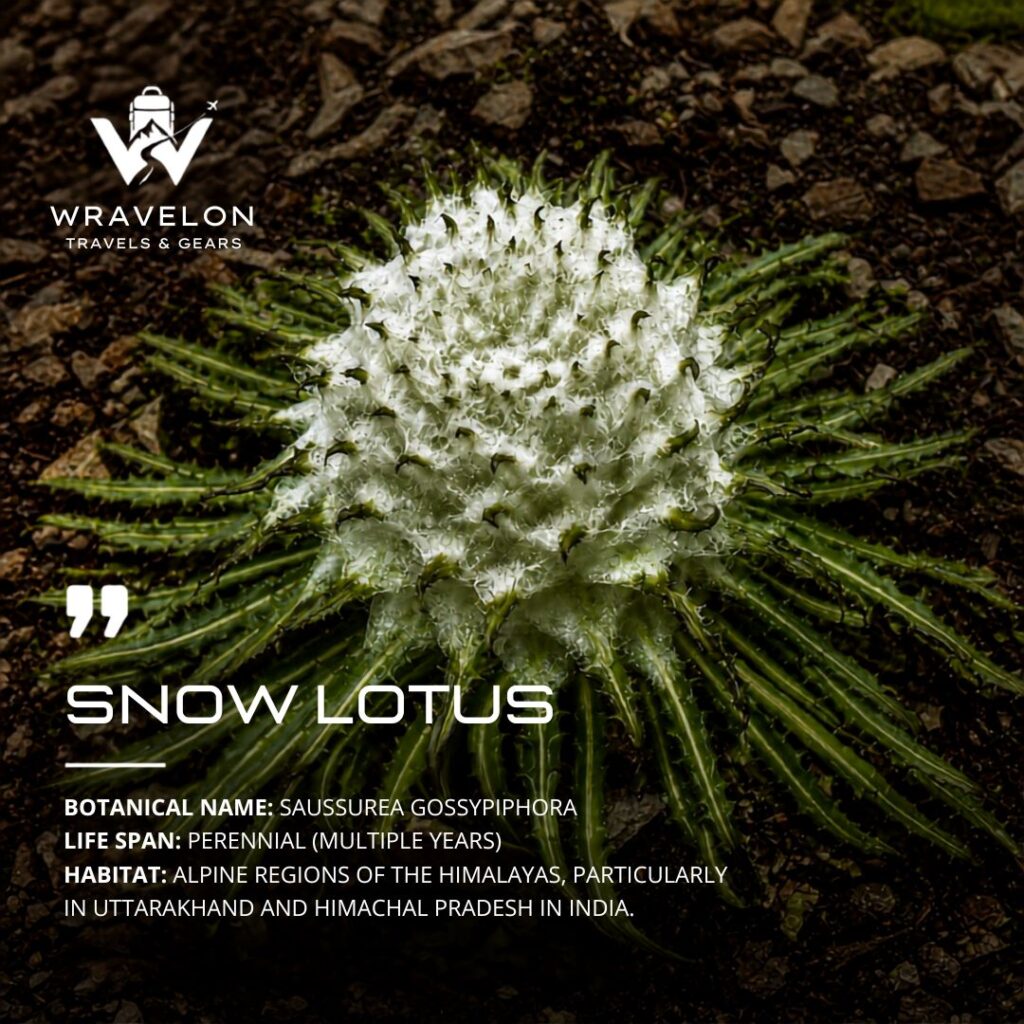
The Snow Lotus is one of the most otherworldly plants in the Himalayas. It looks less like a flower and more like something left behind by a glacier — a dense ball of white, woolly fibres clustered tightly around a centre of tiny florets, the whole structure sitting low and flat against the rock. The wool is not decoration; it is the plant’s insulation against extreme cold and UV radiation at high altitude. It can survive conditions that would kill most alpine plants. In traditional Tibetan and Chinese medicine, Snow Lotus is considered among the most prized medicinal herbs in the Himalayas. You will only find it at the very upper edges of the valley, near and above 4,000 metres.
WravelOn Tip: The Snow Lotus is not always visible on the main valley trail. If you push higher toward the ridgeline above the valley, scan the rocky ground carefully — it sits flush with the surface and is easy to miss from a standing position.
The Valley Has Its Own Rules
The most common regret on this trek is simple: leaving Ghangaria too late. By 10 AM on most monsoon mornings, the clouds are already in. The valley you came to see — the one with the peaks behind it and the flowers catching the light — is gone until tomorrow. Start before 7 AM if you can. The extra hour of sleep is not worth it.
Do not treat the flowers like a checklist. The valley rewards slow walkers far more than fast ones. When something stops you, stop. Look at it properly. The entire point of being here is the being here.
On photography: the conditions that feel like bad weather are usually the best light. Overcast skies, diffused cloud, even light rain — these are what make flower colours look the way they do in every photograph that has ever made you want to come here. Bright midday sun bleaches everything out. Embrace the grey.
And finally — stay on the trail, take nothing, leave no trace. The flowers you photograph this year are the seeds of what the next trekker will find. The valley’s magic is not yours to keep. It is yours to experience and pass on exactly as you found it.
Start early. Walk slowly. Leave no trace.